

Level 4 Diploma
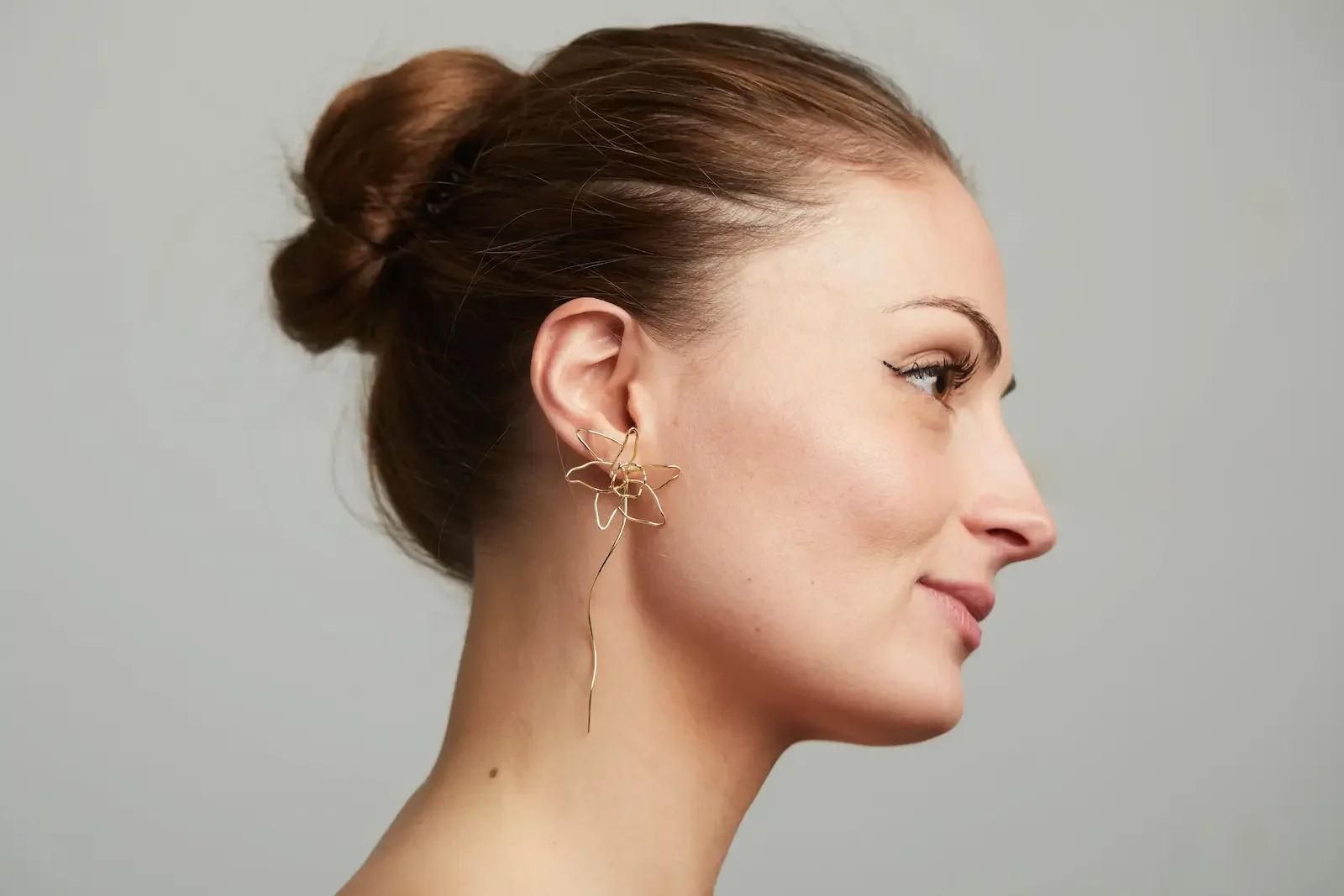
Intermediate jewellery design and making course in London, accredited by Qualification Scotland.
Date and Time
The classes take place 10am - 4pm.
Part-time Option
2 days per week for 2 years (72 weeks)
Mon & Wed or Tues & Thur
Sept 2026 - July 2028
Full-time Option
4 days per week for 1 year (36 weeks)
Mon - Thur
Sept 2026 - July 2027
Tuition Fees
Option 1- Part-time £7,500 per year (£15,000 in total)*
Option 2- Full-time £15,000 per year
Instalment plans are available - see Diploma Programme Guide (page 5) for details.
All tools and course materials (such as brass, copper, pewter, gilding metal) are included in the price, but students will need to buy precious metals and stones.
-
Our courses are not eligible for Student Finance England loans. However, you may be eligible for funding from one of the organisations and charities listed here.
Some of our students received bursaries from The Benevolent Society in the past (contact Laura Banner, laura.b.banner@gmail.com). The charity helps individuals starting or progressing their career journeys through bursaries to help with their studies.
-
1.Booking an interview
Candidates must contact us via email at info@k2jewelleryacademy.london to schedule an interview, either in person at our academy or via Zoom. The interview will be an informal conversation with K2 directors and course leaders, Kelvin Birk and Katrin Spranger.
2.Completing a questionnaire
Before the interview, candidates will receive a questionnaire to complete, detailing their prior experience and interests.
3.Attending an interview
The interview, conducted either at our Central London academy or via Zoom, is an opportunity for us to learn more about the candidate, assess their suitability for the course, and answer any questions they may have. It also allows candidates to share their expectations for the programme. You will be asked to bring a sketchbook and some examples of your work to the interview, if available.
4.Application outcome
After the interview, candidates should inform us of their decision regarding enrolment as soon as they have made it. When decisions are reached, Kelvin and Katrin will contact all applicants with the outcome of their application.
5.Payment
Payment options, including instalment plans, will be discussed with successful candidates. A relevant invoice will be issued, and payments will be required via bank transfer.
Note: At the moment we do not hold a visa sponsorship licence, so we are not able to accept foreign students who require a student visa to stay in the UK.
-
TERM I – Autumn Term
1st half: 14 September – 23 October 2026
Half Term Holiday: 26 October – 1 November 2026
2nd half: 2 November – 10 December 2026
Christmas Holidays: 11 December 2026 - 3 January 2027
TERM II – Spring Term
1st half: 4 January – 11 February 2027
Half Term Holiday: 15 - 21 February 2027
2nd half: 22 February – 25 March 2027
Easter Holidays: 30 March – 11 April 2027
TERM III – Summer Term
1st half: 12 April – 27 May 2027
Half Term Holiday: 31 May –6 June 2027
2nd half: 7 June – 15 July 2027
Experimentation. Creative freedom. Pushing the boundaries.
Those principles are the hallmarks of our jewellery programs. This course combines a conceptual approach to jewellery design and making with professional technical training, laying the groundwork for a head start in your creative career.
About the programme
Jewellery making combines creativity and craftsmanship. In this programme, you’ll explore the full process, from conceptual design to making, while developing practical skills through jewellery projects and assignments.
Ideal for intermediate students, the Level 4 Diploma offers personalised guidance aligned with your career goals. Taught in a cosy workshop with a maximum of nine students, the course includes technical demonstrations, hands-on making, design and drawing exercises, contextual assignments, presentations, professional practice and business development, critiques, and insights from visiting professionals and lecturers.
Students also take part in specialist masterclasses, including electroforming, filigree, keum-boo, trapping stones in metal and granulation—rare techniques not commonly taught elsewhere and a distinctive feature of K2 Academy.
By graduation, students will have created a jewellery portfolio suitable for further study, residency applications, gallery and fair submissions, or entry into the jewellery industry.
The Core Principles of Our Teaching:
MATERIALS, TECHNIQUES & PROCESSES
DRAWING AND EXPERIMENTAL DEVELOPMENT
HISTORICAL & CONTEXTUAL UNDERSTANDING
IDEAS & CONCEPTS
VISUAL COMMUNICATION
Course outline
The course spans two years, divided into six terms (or three terms over one year for full-time students). Each term features a distinct module focusing on specific techniques and thematic research. Alongside, participants engage in drawing sessions, contextual studies, and explore topics including metallurgy, hall marking, design methodologies, marketing, professional practice, and business development. Term modules encompass a variety of topics, such as:
-
developing different types of chains
advanced soldering of links
lockets and clasps
experimenting with different connections in jewellery
sketching, drawing and experimenting with visual language
developing research skills; exploring the history of arts and crafts
-
experiment and work with non-metal e.g. wood, plastics, fabric, leather etc.
fixings and findings for jewellery
cold connections - riveting, glueing, trapping
design development
experimental projects, including time-based projects and non precious materials
-
working with fine gold wire
advanced soldering
granulation
repairing jewellery
earrings and fine findings
working with pre-made components
-
claw setting
setting a princess or baguette cut ston
different surface finishes - patination, oxidation, enamelling and powder coating.
drawing and contextual studies
-
learning advanced jewellery techniques e.g. lockets and hollow containers with hinges
making a hollow ring
constructed jewellery pieces
advanced soldering
exhibition preparation and set-up
analysing and evaluating methods
electroforming jewellery and small objects
-
deepening your skills in sand and cuttlefish casting
advanced wax carving
mould making for casting techniques
introduction into investment casting
-
developing your own design brief and project
developing a portfolio
Contextual awareness, problem solving and critical thinking run alongside practical projects throughout the course.
Learning is supported by homework and extracurricular activities, including guest lectures and field trips to industry-related companies.
Students are encouraged to exhibit their work at the end of the course during Cockpit Bloomsbury Summer Open Studios.
This course is accredited by QS (Qualification Scotland) and corresponds to the QS Advanced Certificate in Art and Design Level 7 - see more here.
Course Leaders
-

Katrin Spranger
K2 ACADEMY CO-FOUNDER AND CO-DIRECTOR
Katrin Spranger, an award-winning German-trained jewellery artist with a Master's degree from Sweden's Konstfack University, creates conceptual art pieces commenting on consumerism, exploring future resource scarcity. Her interdisciplinary approach spans jewellery, painting, performance, sculpture, and installation, showcased in exhibitions worldwide.
-
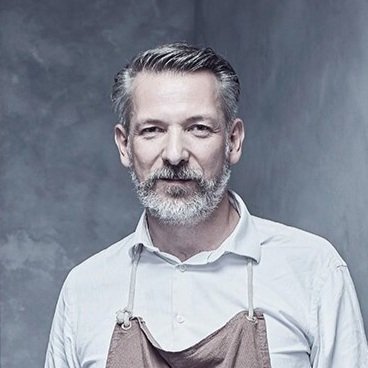
Kelvin Birk
K2 ACADEMY CO-FOUNDER AND CO-DIRECTOR
Master jeweller trained in Germany, holds a Master's degree from the Sir John Cass Faculty of Art in London. Renowned for his avant-garde creations in silver, gold, and crushed gemstones, challenging conventional perceptions of value. His work embraces chaos, allowing materials to dictate outcomes. He exhibits globally and teaches workshops internationally.

“I was drawn to K2 because of its small classes and contemporary teaching style. Kelvin and Katrin always encouraged to push our boundaries, experiment and try new things; they frequently brought new incites and ideas to pieces with the knowledge from their vast experience”
Aimee Mackay, Level 4 Diploma graduate